
From Senior Leader to Executive: Why High-Stakes Career Transitions Are Fundamentally Different

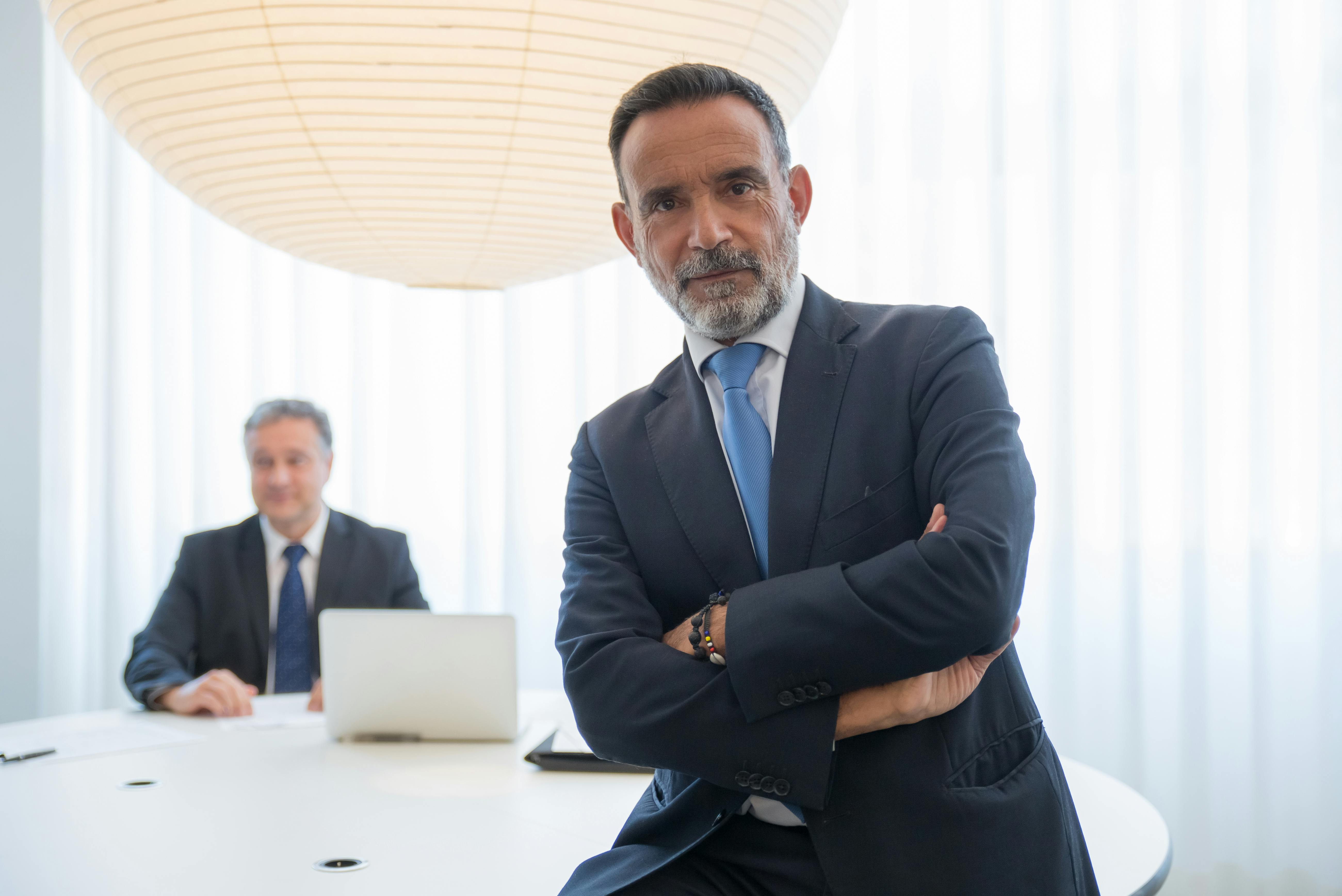
Opening
For much of their careers, high-performing leaders are rewarded for execution.
Results matter. Delivery matters. Reliability matters. Leaders build their credibility by consistently meeting expectations, solving problems, and producing outcomes that are visible, measurable, and valued by the organization. Over time, this creates a clear formula for success—one that feels both dependable and repeatable.
And for a long time, that formula works. It drives progression, recognition, and increasing responsibility. It becomes the foundation upon which leaders build their identity and their reputation.
Until it doesn’t.
The transition from senior leadership into executive roles is not a continuation of that trajectory. It is a fundamental shift in how leadership is defined, evaluated, and trusted. Yet many capable leaders underestimate this shift, assuming that strong performance will naturally carry them forward.
At the executive level, it rarely does.
What Changes Is Not Obvious—But It Is Structural
One of the reasons this transition is underestimated is that, on the surface, it appears incremental. The title is higher. The scope is broader. The expectations are elevated. But the underlying logic of leadership is assumed to remain the same.
In reality, the shift is structural. The organization no longer evaluates leaders primarily based on what they produce. It evaluates them based on how they think, how they prioritize, and how they navigate complexity that cannot be reduced to execution alone.
This creates a disconnect for many strong leaders. They continue to apply a model that has consistently worked—driving results, staying close to the work, proving reliability—without realizing that the criteria for advancement have already changed. The result is not failure. It is stagnation that is difficult to explain.
From Functional Value to Enterprise Contribution
At the senior level, leaders are often recognized for the strength of their functional contribution. They are known for what they deliver within a defined scope—whether that scope is operational, technical, commercial, or strategic within a specific domain.
At the executive level, that framing becomes insufficient. Leaders are no longer evaluated within the boundaries of their function. They are evaluated based on how their decisions affect the enterprise as a whole. Their value is measured not only by outcomes, but by how those outcomes interact with broader organizational priorities, risks, and long-term positioning.
This requires a shift in perspective. Leaders must move from optimizing within a domain to balancing across domains. They must think in terms of systems rather than components. Without that shift, their contribution remains meaningful—but limited in how it is perceived.
Why Strong Experience Is Not the Limiting Factor
Leaders approaching executive roles are rarely lacking in experience. Their track records are strong. Their results are credible. Their progression reflects consistent performance over time.
What often has not evolved at the same pace is their positioning. The way their leadership is understood—both by others and by themselves—remains anchored in execution rather than enterprise impact. Their narrative emphasizes what they have delivered, but not how they think at scale. Their value is communicated through outcomes, but not through judgment.
At the executive level, this distinction becomes critical. Experience alone does not create readiness. It must be interpreted through a lens that signals broader capability. Without that, even strong leaders can appear narrower than they actually are.
The Invisible Shifts That Redefine Leadership
As leaders move closer to executive roles, several shifts occur—often without being explicitly named or explained.
Visibility becomes more selective and more consequential. Leaders are seen less frequently, but when they are, their presence carries greater weight. Each interaction becomes a signal of how they think and operate.
Decision-making shifts from operational to systemic. Leaders are no longer solving isolated problems. They are making decisions that influence multiple parts of the organization simultaneously, often with competing implications.
Influence replaces authority as the primary leadership currency. Leaders must align, persuade, and create movement across stakeholders who may not report to them directly. Authority alone is no longer sufficient to drive outcomes.
These shifts are not always taught, but they are quickly felt. Leaders who do not recognize them often find themselves applying familiar approaches in unfamiliar conditions.
The Risk of Remaining in the Middle
Without adapting to these shifts, leaders can find themselves in a difficult position.
They become highly effective within senior roles, often exceeding expectations and taking on increasing responsibility. At the same time, they are not fully perceived as operating at the executive level. Their contribution remains anchored in delivery rather than direction, in execution rather than enterprise thinking.
This creates an uncomfortable middle space. Leaders are overqualified for where they are, yet not clearly positioned for what comes next. The issue is not capability—it is interpretation. How their leadership is seen does not fully reflect what they are capable of becoming.
And without intentional adjustment, that gap can persist longer than expected.
Why Executive Transitions Must Be Designed
The most successful executive transitions are not the result of momentum alone. They are designed.
Leaders who navigate this shift effectively recognize that what brought them to this point is not enough to carry them forward unchanged. They begin to evolve how they think, how they communicate, and how they position their value before the role requires it.
They let go of over-reliance on execution as proof of impact. They expand their perspective beyond their immediate domain. They begin to operate as enterprise leaders before they are formally recognized as such.
This is not about abandoning strengths. It is about reframing them within a broader context—one that aligns with the expectations of executive leadership.
Final Thought
The shift from senior leadership to executive leadership is not defined by more responsibility. It is defined by a different kind of responsibility—one that is less visible, less immediate, and more dependent on judgment than execution.
Leaders who underestimate this shift often continue doing what has always worked, expecting it to produce the same results. Leaders who recognize it begin to evolve before they are required to.
At the executive level, advancement is not simply a continuation of performance. It is a transition into a different model of leadership—one that must be understood, developed, and intentionally stepped into.
Executive Reflection Questions
- Where are you still relying on execution as your primary signal of value?
- How clearly does your current positioning reflect enterprise-level thinking versus functional strength?
- What shifts do you need to make now to be seen as operating at the level you want to reach next?
Stay Ahead of Your Next Move
Get strategic insights, practical tools, and professional updates delivered directly to your inbox.